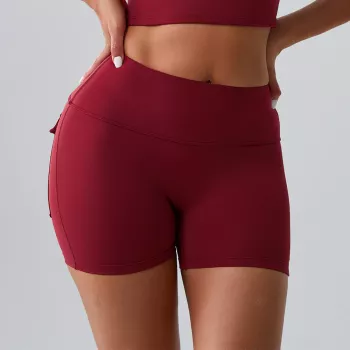
High-waist workout shorts are built for movement: they stay put through squats, runs, and intervals while offering a smooth, supportive feel at the core. Whether training is heavy and strength-focused or fast and high-impact, the right pair can help maintain coverage, reduce distractions, and keep comfort consistent from warm-up to cooldown. Below is a practical guide to what to look for, how to match high-waist impact shorts to different workouts, and how to dial in fit and care so they perform session after session.
High-waist impact shorts are designed around stability. A higher rise waistband helps reduce rolling and shifting during dynamic movements like jump squats, sprints, and burpees. Many pairs also feature a compressive feel that can increase perceived support during lifts and high-impact intervals—especially when bracing the core or moving quickly through transitions.
Compared with full-length leggings, shorts improve ventilation and freedom of movement, which is a big win in warm gyms, outdoor summer workouts, or sweat-heavy HIIT classes. They’re typically chosen for activities where staying aligned matters: running, HIIT, strength training, cycling, and circuits.
For general physical activity recommendations and weekly movement targets, the CDC Physical Activity Basics is a helpful reference point. If training involves learning new lifts or movement patterns, the American Council on Exercise (ACE) Exercise Library offers clear exercise guidance and form cues.
When shopping, focus on how the shorts behave under real movement—not just how they feel standing still. Prioritize a waistband that feels secure when bending, bracing, and breathing hard. Fabric should balance stretch and recovery so it doesn’t loosen after a warm-up, and the inseam should be comfortable enough to prevent chafing without restricting stride. Always check opacity with a squat test in bright light.
| Feature | Why it matters | What to check at home |
|---|---|---|
| High waist | Helps shorts stay in place during impact | Jumping jacks + deep squat: waistband should not roll |
| Compression/support | Stability and reduced bounce feel | Run in place: legs feel supported but not pinched |
| Stretch recovery | Prevents sagging over time | After stretching, fabric returns quickly without wrinkling |
| Breathability | Comfort during sweaty sessions | After 10 minutes, fabric shouldn’t feel clammy |
| Chafe control | Comfort for runs and longer workouts | Walk briskly: inner thigh seam shouldn’t rub |
Fit is the difference between “supportive” and “distracting.” Start at the waistband: it should sit high without digging, and a wider band typically feels more stable. If the top edge bites in or creates a sharp line, that often signals either sizing is too small or the waistband is too narrow for your torso length.
Through the hips and thighs, aim for smooth contact without shear discomfort. Excessive tightness can cause rolling, especially when you hinge forward or drive knees up repeatedly. For inseam, shorter lengths increase airflow, while longer inseams can reduce inner-thigh rubbing—often the better pick for longer runs or high-volume walking.
Use a simple movement test before committing: squat, hinge, lunge, and do a short jog in place. The shorts should stay aligned, feel supportive without numbness, and remain opaque under stretch.
High-waist impact shorts are versatile across training styles:
If training includes pregnancy or postpartum considerations, consult a clinician for individualized guidance; the ACOG Committee Opinion on exercise during pregnancy and postpartum is a reputable overview.
If stable support at the waist is the priority, High Waist Women’s Impact Workout Shorts are a straightforward option for training days that involve impact, bracing, and repeated transitions. They pair well with sports bras, cropped tops, or lightweight tees for gym sessions and outdoor workouts, and they’re priced at $20.82 (in stock).
They can help, but rolling depends on waistband width, compression level, and whether the rise matches your torso length. If rolling happens, try a slightly larger size or a wider waistband and retest with squats and jumping jacks.
Aim for “snug and supportive” without numbness, pinching, or restricted breathing. You should be able to squat and lunge comfortably, and the waistband shouldn’t dig in when you brace your core.
Choose an inseam length that minimizes inner-thigh rubbing, and look for smooth seams that don’t irritate during repeated motion. For longer runs, an anti-chafe balm can help, and a stay-put leg opening reduces ride-up that often causes friction.










Leave a comment