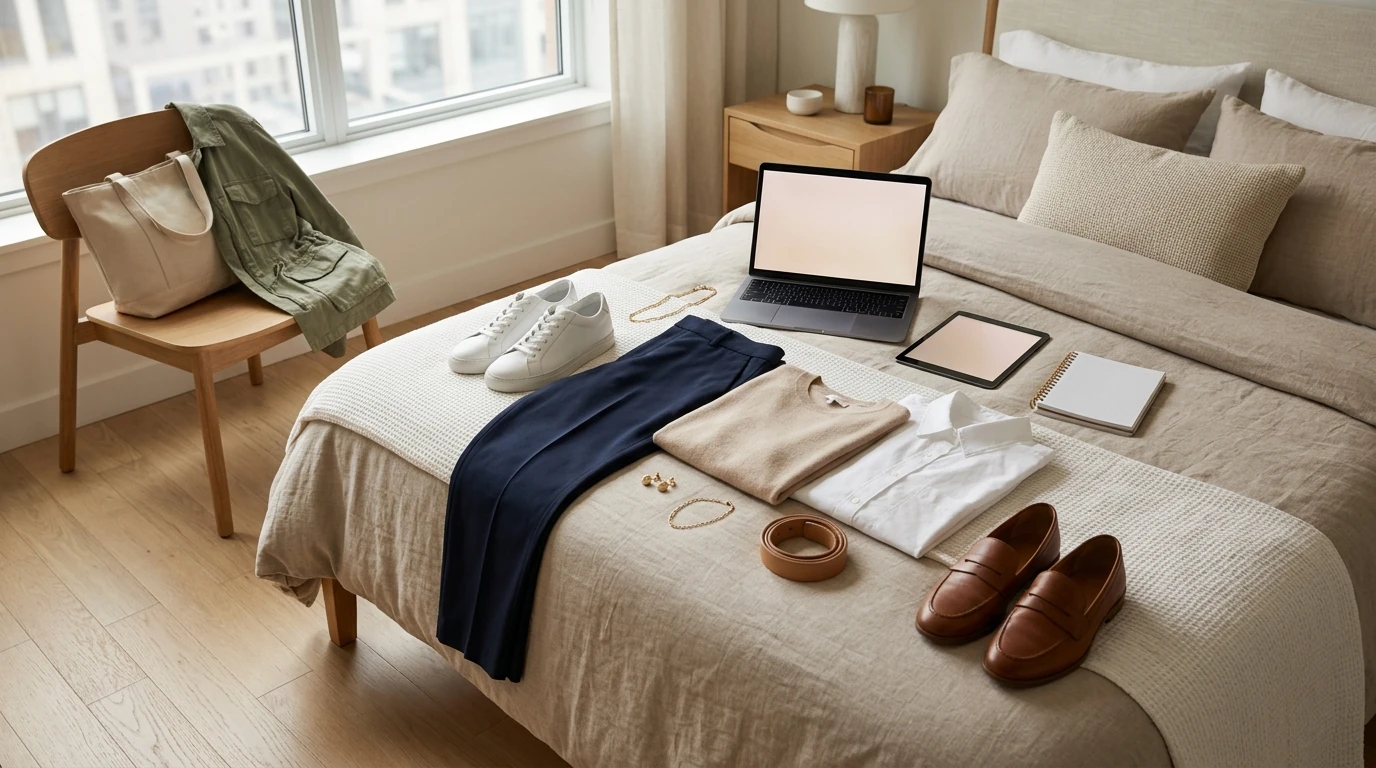
Signature style isn’t about becoming “the person who always wears black” or repeating the same outfit on autopilot. It’s a recognizable through-line—a few consistent shapes, colors, textures, or a general mood—that makes your outfits feel cohesive even when the pieces change.
Most importantly, signature style is built for function. It supports how your days actually run: commuting, presenting, traveling, meeting friends, or squeezing errands between calls. It also isn’t a rigid uniform. Your style can shift with seasons and life phases while staying grounded in a handful of repeating elements.
When it’s working, signature style shows up as confidence: less second-guessing, fewer impulse purchases, and more outfits that feel like an easy “yes.” Research also links clothing to psychological outcomes (often described as “enclothed cognition”), which helps explain why the right outfit can influence how capable and focused you feel in the moment.
Enclothed Cognition: Systematic Review of the Effects of Clothing on Psychological Outcomes
A great signature wardrobe doesn’t start on a shopping page—it starts with clarity. Take 15 minutes and list the top five situations that require outfits in a typical week (office days, remote calls, client meetings, workouts, weekend plans, school pickup, travel, faith events—whatever applies).
Next, note the real-world constraints that shape your best outfits: dress code, climate, comfort needs, footwear tolerance, laundry rhythm, and storage space. These aren’t limitations; they’re guardrails that keep you from buying for a fantasy life.
Now do a fast closet scan:
| Life Moment | Priority (Comfort/Polish/Movement) | Go-To Pieces | What’s Missing |
|---|---|---|---|
| Office or coworking days | Polish + comfort | Structured pants, knit top, low-heel shoes | A consistent layering piece |
| Video calls | Polish on top | Solid tee, cardigan/blazer, simple jewelry | Better neckline options |
| Errands + casual plans | Movement + ease | Soft pants, sneakers, light jacket | Outfit that feels intentional |
| Events or dinners | Polish + personality | Dress or elevated separates | Statement element that feels like you |
Signature style becomes obvious when you look for repeats. Start with silhouettes: do you consistently reach for straight-leg pants over wide-leg? Fitted knits over oversized layers? Waist definition, or a longer column shape?
Then identify your color comfort zone. This isn’t about rules—it’s about what you actually wear. Choose the neutrals that you truly like on yourself (not just the ones you “should” like), then add one or two accent colors that reliably energize your look.
Texture is your quiet style language. Crisp cotton reads clean and polished; knits read approachable; denim reads casual; linen reads relaxed; leather reads structured; satin reads elevated. Picking two or three “home base” materials makes outfits easier to mix.
Finally, choose 2–4 signature details—repeatable elements that make an outfit feel like you. Examples include: monochrome looks, gold jewelry, tailored pants, puff sleeves, a specific neckline, clean sneakers, or an always-present belt.
To make the process stick, build a short “no” list: fabrics that irritate, cuts that feel fussy, and colors that wash you out. This prevents backsliding when you’re shopping quickly.
AI can help you see patterns faster—as long as you feed it your preferences and constraints. Think of it as a sorting assistant, not a style replacement.
APA Dictionary of Psychology: Self-efficacy
If a clear process sounds more helpful than endless inspiration, Signature Style Unlocked eBook lays out a practical structure to define outfit formulas, reduce closet overwhelm, and use AI-friendly inputs without losing authenticity. It’s designed for anyone who wants to feel put-together without overbuying or constantly starting over.
Many people get clear on their go-to silhouettes and outfit formulas in 2–4 weeks, especially with a focused closet audit. Consistency usually takes 2–3 months as you refine your palette, tailor fit issues, and stop buying outside your “yes” criteria.
Yes—keep the same silhouettes and palette, then change fabric, footwear, and layering to shift the vibe. For example, tailored pants + simple top becomes weekend-ready by swapping the blazer for an overshirt and the work shoe for a clean sneaker.
The most useful tools are moodboard/theme summarizers, outfit generators based on your actual closet list, and gap-analysis helpers that recommend the smallest additions for the biggest outfit payoff. The key is adding constraints—budget, comfort, dress code, and your “no” list—so results stay specific to you.







Leave a comment